
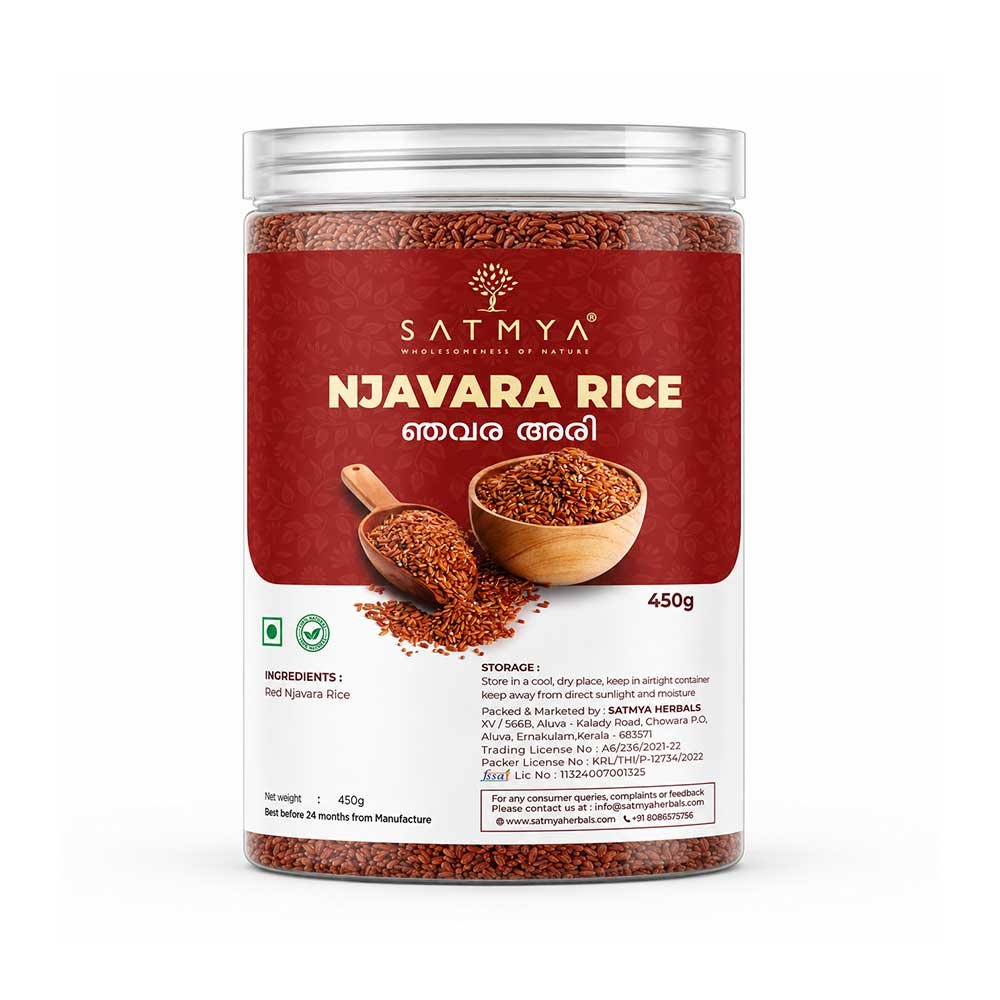
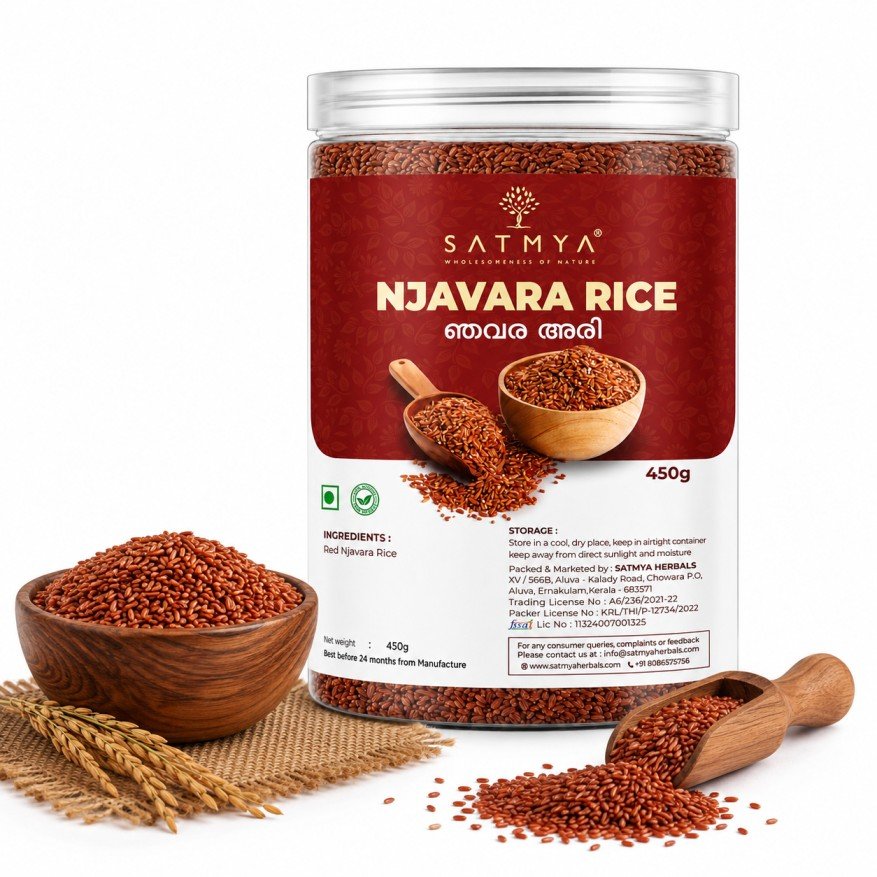
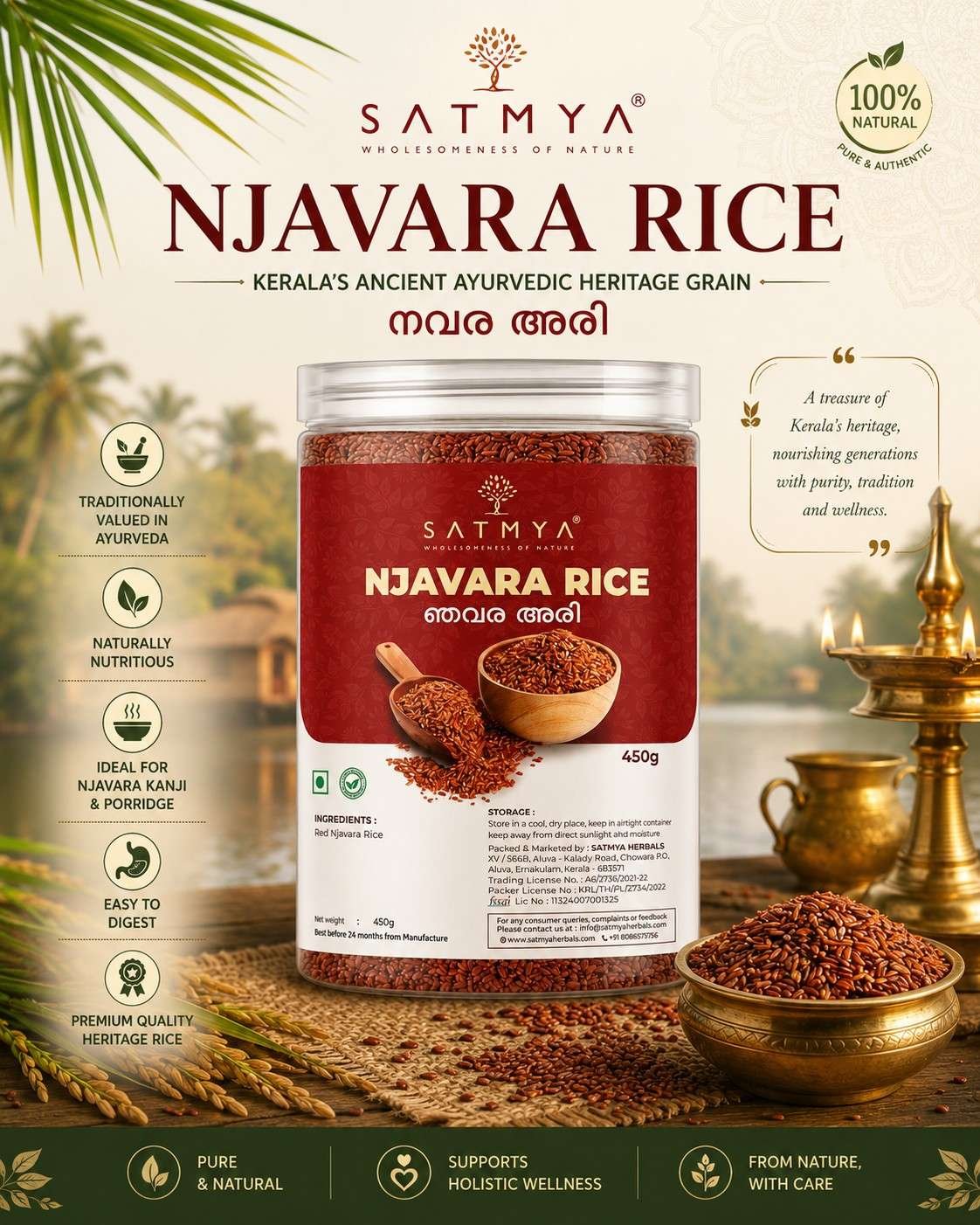
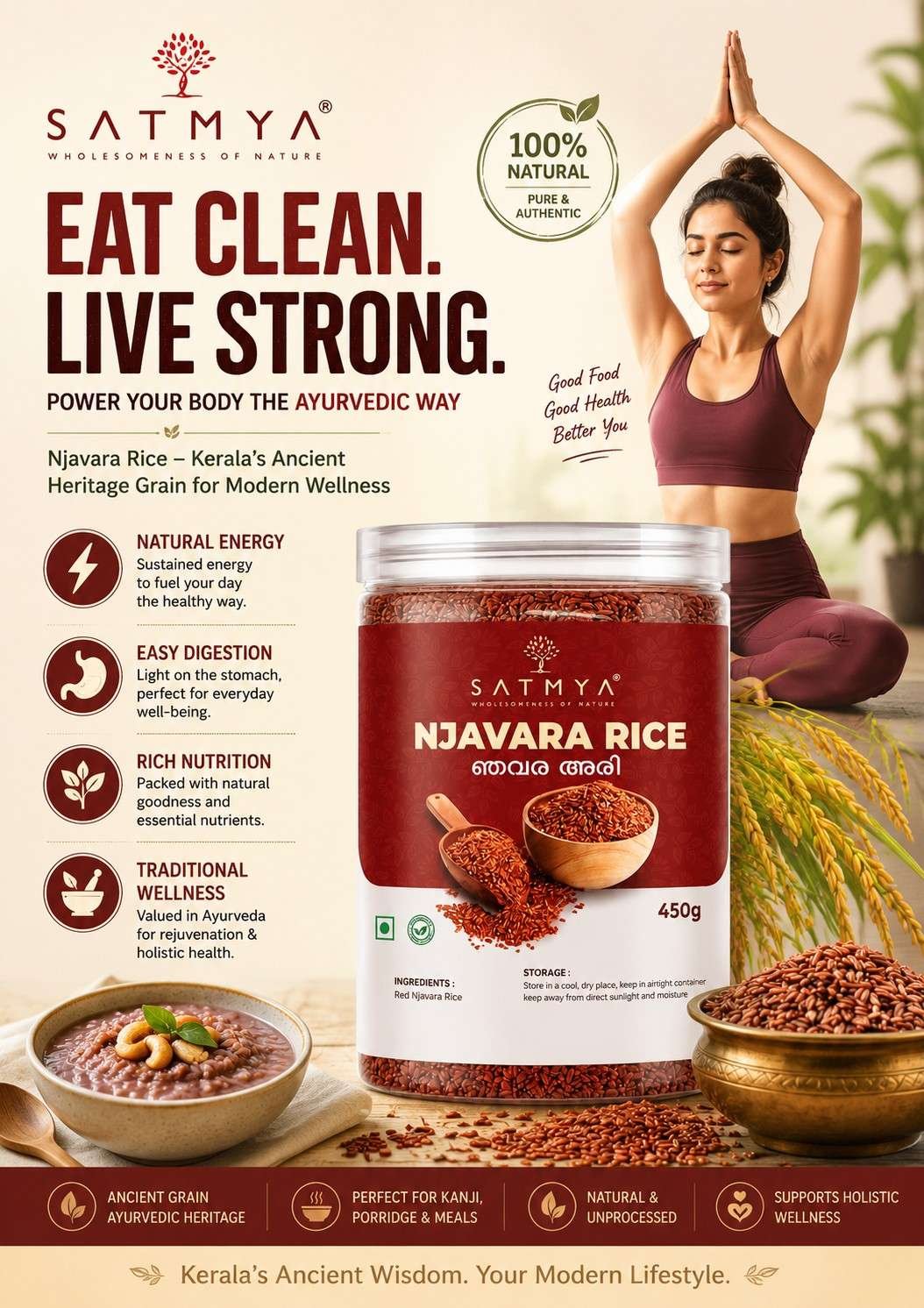
Njavara | നവര അരി (Navara Ari / Njavara Ari) | शष्टिक शालि (Shashtika Shali) | नवरा चावल (Navara Chawal) | நவரா அரிசி (Navara Arisi) | ನವರ ಅಕ್ಕಿ (Navara Akki) | నవర బియ్యం (Navara Biyyam)
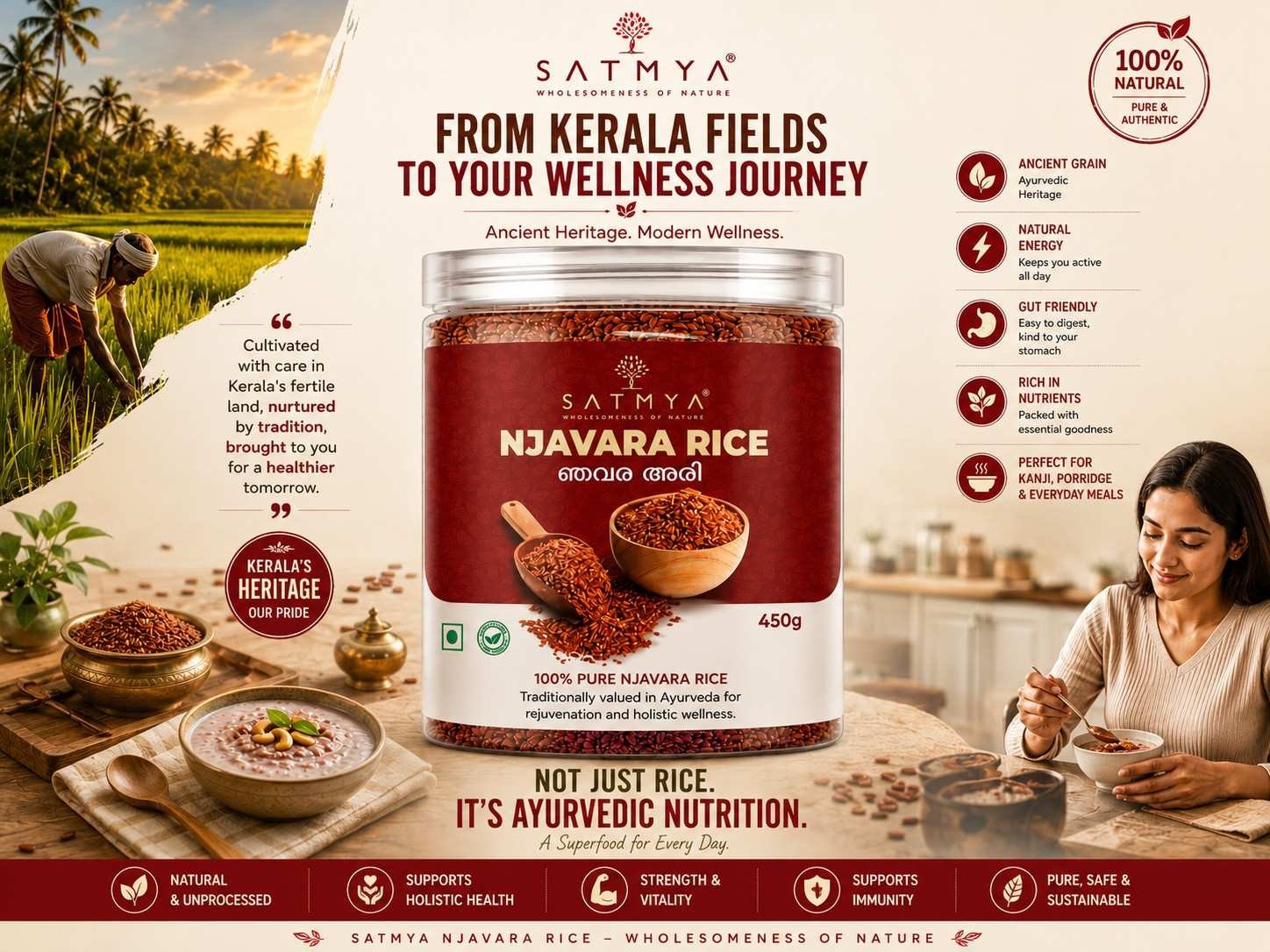
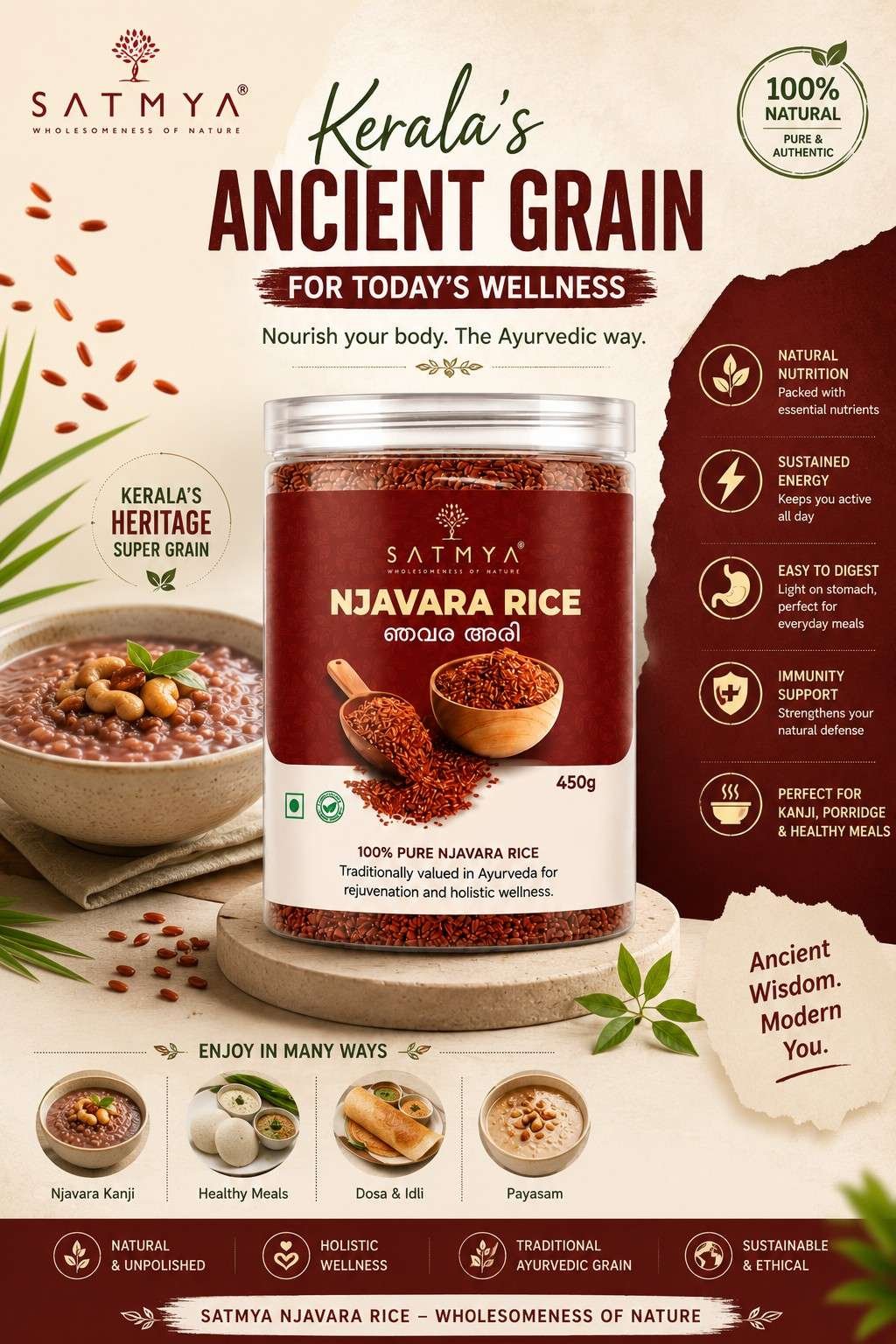
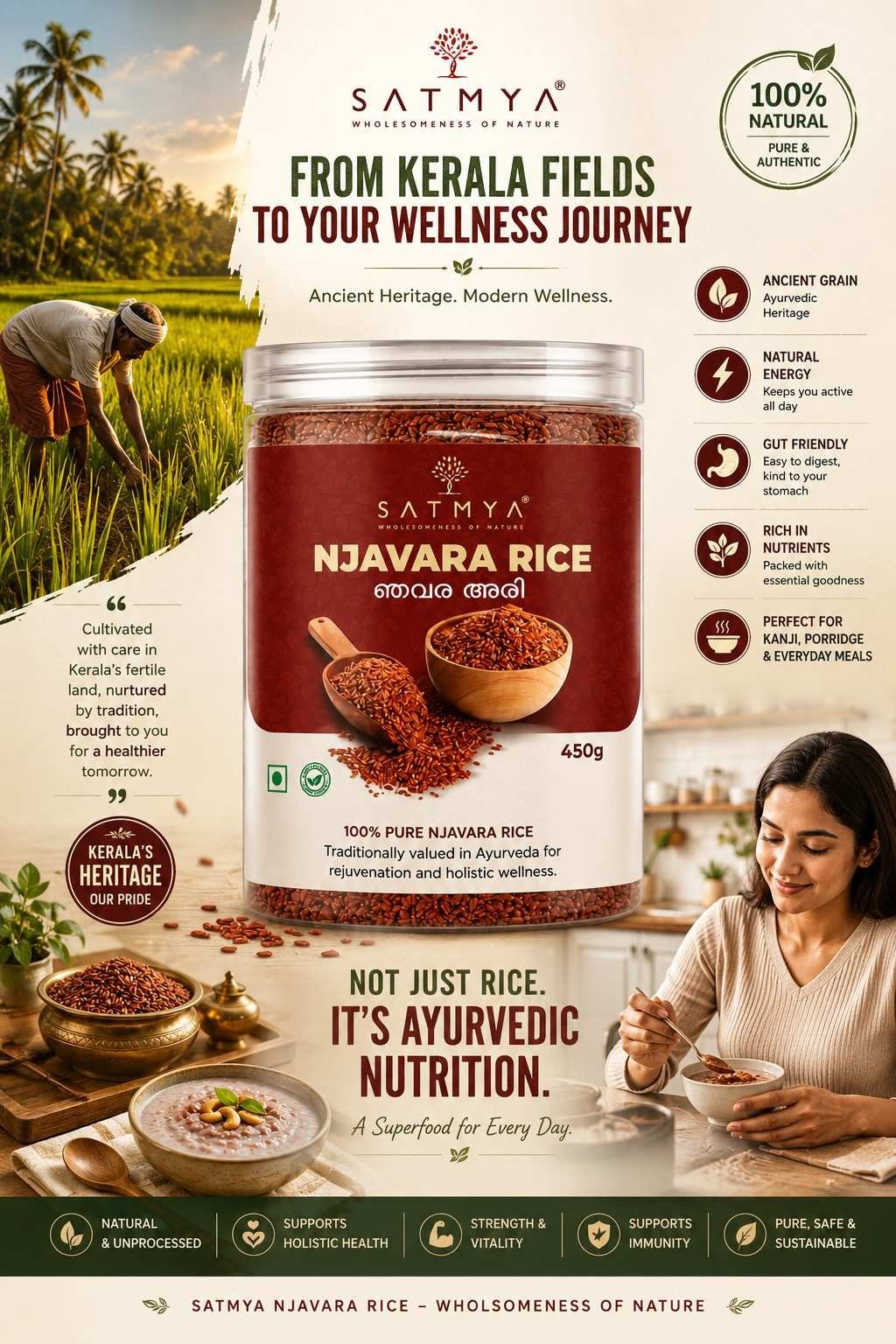
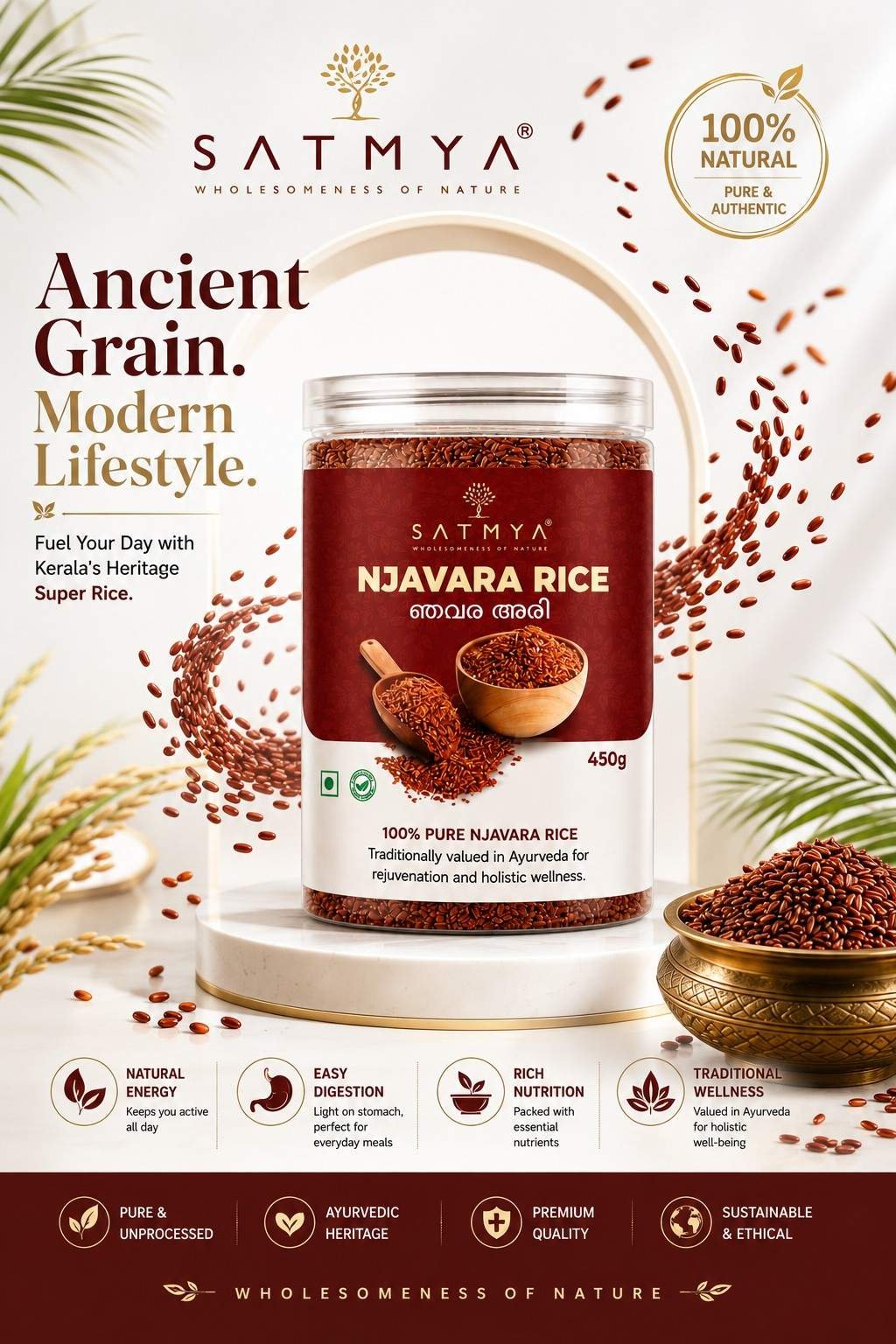
Njavara (or Navara) rice is an ancient, GI-tagged red rice native to Kerala, India. Highly prized in Ayurveda, it is celebrated for its therapeutic properties, rich antioxidant content, and easy digestibility.
Key Characteristics & Uses
- Medicinal Value: Traditionally used in Ayurvedic therapies, like Navarakizhi (poultice treatments for neuromuscular conditions), and to soothe joint stiffness.
- Nutritional Profile: Unpolished and rich in dietary fiber, complex carbohydrates, iron, and B vitamins.
- Dietary Uses: Highly regarded as an easily digestible weaning food for infants, a nourishing cereal for pregnant women, and a wholesome option for diabetic-friendly diets.
- Cooking: Typically prepared as a porridge or gruel (kanji) often combined with herbs and milk, or eaten as plain rice.
How to Cook Njavara Rice
- Soak: Rinse the rice thoroughly and soak it for 5 to 6 hours to soften the grains.
- Boil: Use a ratio of 3 cups of water to every 1 cup of raw rice.
- Simmer: Cook for roughly 25 minutes if pre-soaked, or up to 55 minutes for unsoaked grains, until it reaches a soft, porridge-like consistency.
Nutritional Value (Approx. per 100g)
- Carbohydrates: 70–75 g
- Protein: 8–10 g
- Fiber: 2–4 g
- Iron: Moderate amount
- Calcium & Magnesium: Present naturally
Ayurvedic Importance
Njavara is a special rice mentioned in Ayurveda and is the primary ingredient in Njavarakizhi, a renowned Kerala Panchakarma therapy used for:
- Neuromuscular disorders
- Joint stiffness
- Muscle wasting
- General body rejuvenation
| Nutrient | Amount per 100 g |
| Energy | 350 kcal |
| Carbohydrates | 76 g |
| Protein | 8.5 g |
| Total Fat | 0.8 g |
| Dietary Fiber | 2.5 g |
| Calcium | 20 mg |
| Iron | 2.0 mg |
| Magnesium | 45 mg |
| Potassium | 180 mg |
| Sodium | 5 mg |
Reviews
There are no reviews yet.